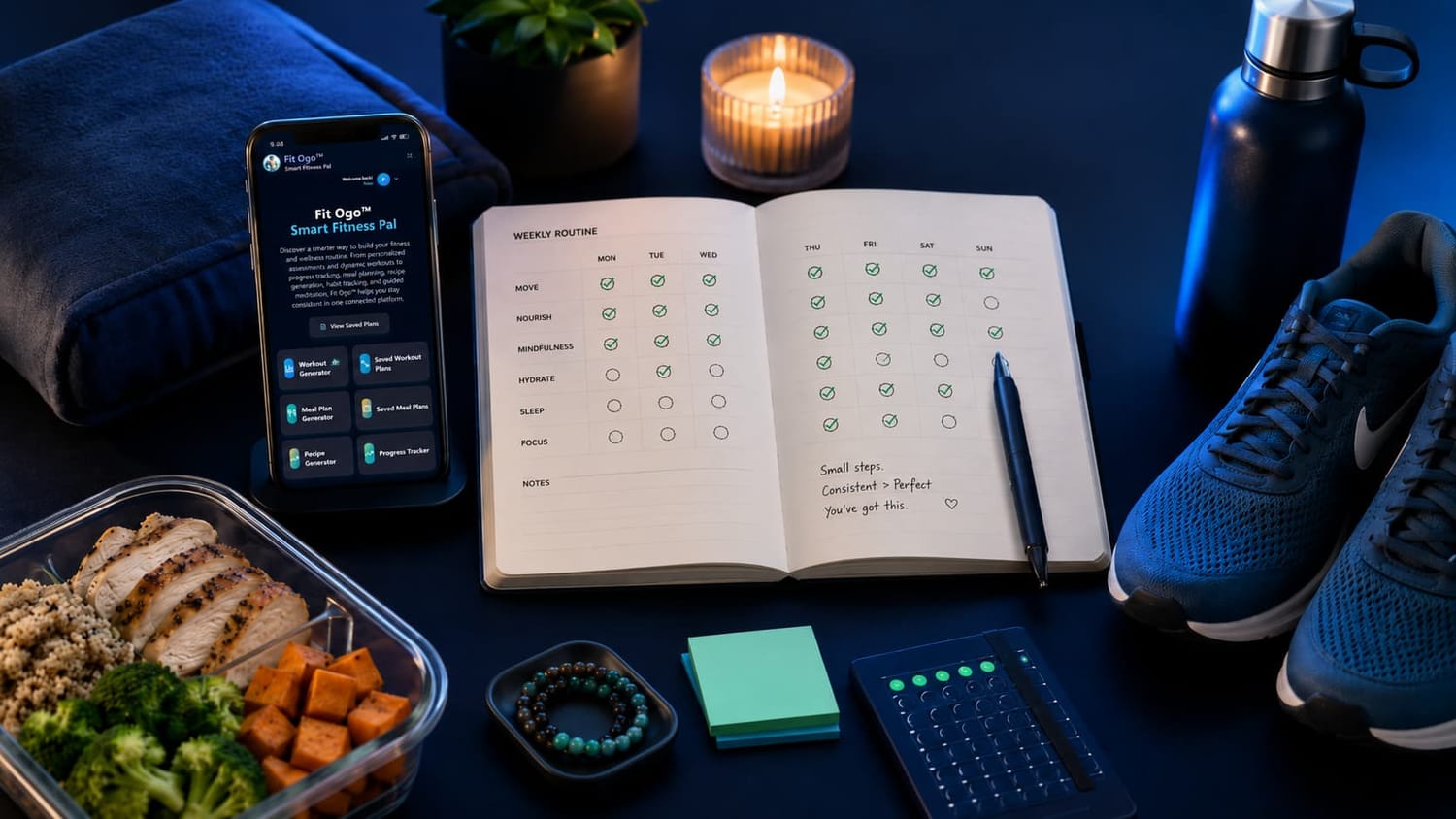
Many people think starting over is a sign of failure. They begin a new routine, miss a few days, feel disappointed, and then tell themselves they are back at zero.
But wellness does not work like a perfect streak. Real life includes busy schedules, tired days, family responsibilities, work pressure, stress, illness, travel, and seasons where motivation drops. A good routine should help you return, not make you feel guilty for being human.
That is the heart of this guide: if you keep starting over, you probably do not need more pressure. You need a routine that is simple enough to repeat and flexible enough to restart.
Important: This article is for general wellness education only. Fit Ogo™ does not provide medical advice, diagnosis, treatment, emergency care, mental health therapy, or clinical fitness or nutrition guidance. If you have a medical condition, injury, pregnancy-related concern, medication issue, disability-related concern, significant distress, or other health concern, speak with a qualified healthcare professional before starting a new routine.
Why You Keep Starting Over
Most people do not restart because they lack discipline. They restart because the plan they chose was too large, too rigid, too vague, or too disconnected from their real life.
A strict workout plan might look impressive, but if it does not fit your energy and schedule, it will collapse quickly. A complicated meal plan might sound healthy, but if it requires too much shopping, cooking, and decision-making, it may not last.
The same is true for meditation, habits, hydration, sleep routines, and progress tracking. If the next step feels too heavy, the routine becomes easy to avoid.
Fit Ogo™ principle: The best routine is not the most intense one. It is the one you can return to after an imperfect day.
Step 1: Stop Calling It Failure
The first mindset shift is simple: starting again is not failure. It is part of behavior change.
If you missed a workout, you learned something about your schedule. If you stopped meal planning, you learned something about your food routine. If meditation felt hard, you learned that the practice may need to be shorter or gentler.
The goal is not to build a routine you never interrupt. The goal is to build a routine you can return to.
Step 2: Choose One Anchor Habit
When you keep starting over, do not restart with five goals at once. Choose one anchor habit.
An anchor habit is the smallest action that helps the rest of your routine feel more possible. It should be simple, repeatable, and easy to connect to your day.
| If Your Main Problem Is... | Choose This Anchor Habit | Fit Ogo™ Tool to Use |
|---|---|---|
| You feel inactive | Take a short walk or generate a beginner movement plan. | Workout Generator |
| Food feels disorganized | Plan one simple meal or breakfast for tomorrow. | Meal Plan Generator |
| You lose consistency | Track one small daily action only. | Habit Tracker |
| Your mind feels busy | Try one minute of breathing or meditation. | Meditation Generator |
| You feel unsure what is working | Review one small win at the end of the day. | Progress Tracker |
Step 3: Make the Routine Smaller Than Your Motivation
Motivation often makes you plan too much. You feel inspired, so you decide to exercise daily, eat perfectly, meditate every morning, drink more water, sleep earlier, track everything, and change your whole life in one week.
That sounds productive, but it often creates overload.
A better approach is to make your routine smaller than your motivation. When you feel excited, still choose the smaller version first. That way, when motivation drops, the routine remains possible.
This is why small habits matter. Learn why small habits beat big motivation.
Step 4: Build a Simple Weekly Rhythm
A wellness routine becomes easier when it has a rhythm. You do not need a complicated schedule. You only need a simple structure that helps you know what to do next.
| Day | Focus | Simple Action |
|---|---|---|
| Monday | Movement | Generate or repeat a beginner-friendly workout. |
| Tuesday | Meal planning | Plan one simple meal or prep one easy option. |
| Wednesday | Habit tracking | Track one habit you can repeat. |
| Thursday | Mindfulness | Try one minute of breathing or meditation. |
| Friday | Progress reflection | Notice one small win from the week. |
| Weekend | Reset | Keep what worked and shrink what felt too hard. |
Step 5: Use “Return Points” Instead of Restart Pressure
A return point is a tiny action that brings you back into the routine after you fall off track.
Instead of saying, “I failed, so I have to restart everything,” say, “What is my return point today?”
- If you missed workouts, return with a five-minute walk.
- If meal planning collapsed, return by planning one breakfast.
- If meditation stopped, return with one breath.
- If tracking felt overwhelming, return by tracking one habit only.
- If the week felt messy, return by reviewing one small win.
This approach keeps the routine alive because it removes the shame from starting again.
Step 6: Connect Fitness, Food, Habits, and Calm
A wellness routine works best when the pieces support each other. Movement helps energy. Food planning reduces decision fatigue. Small habits create consistency. Meditation supports calm and recovery. Progress tracking helps you notice what is working.
That is why Fit Ogo™ connects these tools in one place. You can begin with the tool that solves your most immediate problem, then add another tool later.
Start with movement
If fitness feels intimidating, learn how to start a fitness plan when you feel out of shape.
Organize food
If food feels scattered, learn how to build a simple meal planning routine.
Add calm
If meditation feels confusing, learn how to start meditating when you have no idea where to begin.
Step 7: Track Evidence, Not Perfection
Many people use tracking as a way to judge themselves. But tracking is more useful when it becomes evidence.
Instead of asking, “Was I perfect?” ask:
- What did I repeat?
- What felt easier?
- What felt too hard?
- What helped me return?
- What should I shrink next week?
This turns tracking into learning. It helps you adjust without quitting.
A Simple 7-Day Restart Plan
Use this plan when you feel like you are starting over again.
| Day | Focus | Simple Action | Fit Ogo™ Tool |
|---|---|---|---|
| Day 1 | Reset gently | Choose one anchor habit. | Habit Tracker |
| Day 2 | Move simply | Generate a beginner-friendly workout or take a short walk. | Workout Generator |
| Day 3 | Plan one meal | Create one simple food routine for tomorrow. | Meal Plan Generator |
| Day 4 | Add calm | Try one minute of breathing or meditation. | Meditation Generator |
| Day 5 | Save what works | Save a useful workout, meal plan, or meditation. | Saved Plans |
| Day 6 | Track one win | Write down one thing you repeated or returned to. | Progress Tracker |
| Day 7 | Adjust | Keep the easiest habit and shrink anything that felt too hard. | Progress Tracker |
Common Restart Mistakes to Avoid
- Restarting too aggressively: Do not punish yourself with an extreme plan.
- Changing everything at once: Start with one anchor habit.
- Waiting for motivation: Use a return point instead.
- Tracking too much: Track the smallest useful action.
- Ignoring recovery: Rest, calm, and sleep support consistency.
- Quitting after one missed day: Missing a day is normal. Returning is the skill.
FAQs
Why do I keep starting over with my wellness routine?
Many people keep starting over because their routine is too big, too rigid, or too hard to fit into real life. A smaller, more flexible routine is usually easier to repeat and return to.
What should I do first when restarting?
Choose one anchor habit. This could be a short walk, one planned meal, one minute of breathing, or tracking one small habit.
How can Fit Ogo™ help me restart?
Fit Ogo™ can help you generate simple workouts, meal plans, recipes, meditation routines, and habit tracking pathways so you can restart with structure instead of overwhelm.
Should I restart my whole routine at once?
Usually, no. It is better to restart with one small action and add more only when the first action feels easier to repeat.
Is Fit Ogo™ medical advice?
No. Fit Ogo™ provides general fitness, nutrition, habit, meditation, and wellness education only. It does not provide medical advice, diagnosis, treatment, emergency care, or mental health therapy.
Conclusion: You Are Not Back at Zero
If you keep starting over, you are not broken. You are learning what your routine needs in order to last.
Start smaller. Choose one anchor habit. Use return points. Track evidence, not perfection. Let your routine grow gradually instead of forcing it all at once.
With Fit Ogo™, the goal is not to build a perfect wellness routine. The goal is to build one you can return to.
General wellness education only. Fit Ogo™ does not provide medical advice, diagnosis, treatment, emergency care, mental health therapy, or clinical fitness or nutrition guidance. If you have a medical condition, injury, medication concern, pregnancy-related concern, disability-related concern, significant distress, or other health issue, please speak with a qualified healthcare professional before starting a new fitness, nutrition, supplement, meditation, or wellness routine.