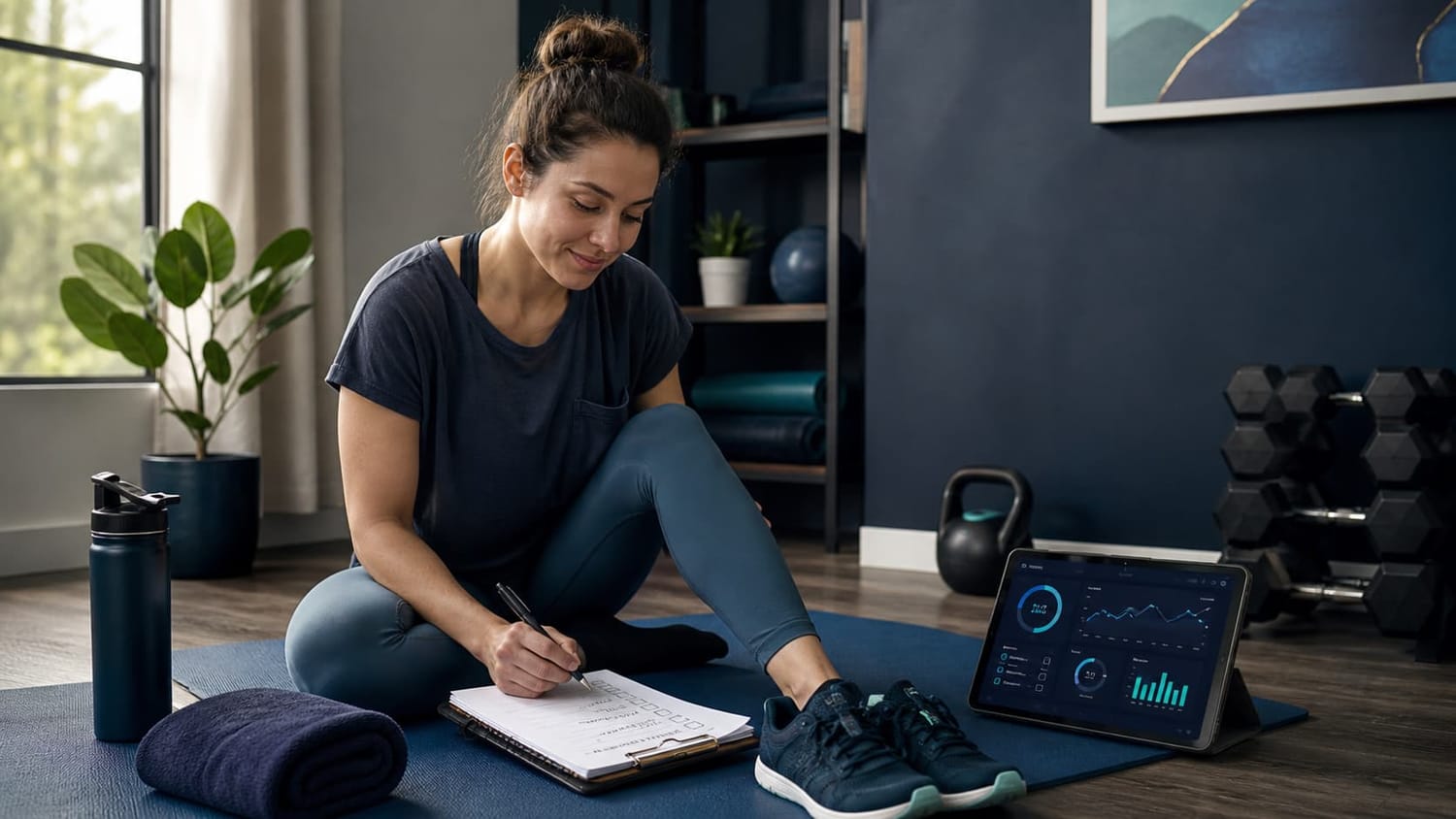
Feeling out of shape does not mean you have failed. It usually means your body, schedule, habits, and confidence need a reset. Many people try to fix that by starting too hard: long workouts, strict food rules, unrealistic schedules, and pressure to change everything at once.
That approach often collapses because it depends on motivation. Motivation can be useful, but it is not stable enough to carry a whole fitness routine. A better approach is to build a plan that feels almost too simple to begin.
This guide will show you how to start a fitness plan when you feel out of shape using a practical, beginner-friendly framework. You can use it on its own, or you can use Fit Ogo™ — Smart Fitness Pal to generate workouts, track habits, save useful plans, and review your progress over time.
Important: This article is for general wellness education only. It is not medical advice, diagnosis, treatment, or emergency guidance. If you have a medical condition, injury, pregnancy-related concern, medication issue, chest symptoms, dizziness, severe pain, breathing problems, or uncertainty, speak with a qualified healthcare professional before starting a new routine.
Why Starting Feels So Hard
When you feel out of shape, the hardest part is often not the workout itself. It is the mental weight around starting. You might compare yourself to your younger self, to people online, or to a version of yourself you wish you were already living as.
That pressure can make fitness feel like a test you are already failing. But fitness is not a test. It is a relationship with your body, your time, your energy, and your habits.
The first goal is not to transform your body overnight. The first goal is to rebuild trust with yourself. Every time you complete a small action you promised yourself, that trust grows.
The Best First Goal: Become Consistent Before Becoming Intense
A common mistake is trying to begin with intensity. People jump into hard workouts, push too fast, feel sore, lose confidence, and stop. A better first goal is consistency.
Consistency means you are training your identity before your intensity. You are teaching yourself, “I am someone who shows up.” That matters more than the size of the workout in the beginning.
Start with a level of movement you can repeat. For some people, that might be a 10-minute walk. For others, it might be a short home workout, gentle stretching, chair exercises, or a beginner strength routine. The right starting point is the one that is safe, repeatable, and realistic for your life.
A Simple 4-Step Beginner Fitness Plan
1. Choose one clear goal
Pick one goal for the next two weeks: move more, build strength, improve energy, restart walking, or create a simple workout habit.
2. Start with easy movement
Choose movement that feels doable. Walking, stretching, bodyweight basics, or light strength work can all count.
3. Track one habit
Track one action daily, such as walking, stretching, drinking water, preparing meals, or completing a short workout.
4. Review weekly
At the end of each week, ask what worked, what felt too hard, and what you can repeat next week.
5. Support it with food
Do not overhaul your diet overnight. Start with one supportive meal-planning action, such as preparing breakfast or planning simple dinners.
6. Include recovery
Sleep, breathing, stretching, and calm routines support consistency. Fitness improves better when recovery is part of the plan.
Your First 7 Days: A Gentle Starter Plan
Your first week should feel manageable. It should give you small wins, not punish you for being a beginner. Here is a simple starting structure:
| Day | Focus | Simple Action | Fit Ogo™ Tool to Use |
|---|---|---|---|
| Day 1 | Start gently | Take a 10-minute walk or do light stretching. | Workout Generator |
| Day 2 | Build awareness | Track how your body feels before and after movement. | Progress Tracker |
| Day 3 | Add simple strength | Try beginner bodyweight movements such as sit-to-stand, wall push-ups, or gentle core work. | Workout Generator |
| Day 4 | Support with food | Plan one simple balanced meal or snack. | Meal Plan Generator |
| Day 5 | Practice consistency | Repeat one movement action from earlier in the week. | Habit Tracker |
| Day 6 | Recover | Try breathing, stretching, or a short meditation. | Meditation Generator |
| Day 7 | Review | Notice what felt realistic and choose what to repeat next week. | Progress Tracker |
How Hard Should Your First Workouts Be?
In the beginning, your workouts should feel easier than your ego wants them to feel. That is not weakness. That is strategy.
If you finish every workout completely drained, your body may start associating exercise with punishment. If you finish thinking, “I could do that again,” you are more likely to return.
A useful beginner guideline is to aim for a level where you can still speak in short sentences during movement. You should feel like you are working, but not like you are fighting for survival.
Fit Ogo™ tip: Use the Workout Generator to create a beginner-friendly plan. Then save the plan if it feels realistic. Your first plan does not need to be perfect; it only needs to be usable.
What If You Miss a Day?
Missing a day does not ruin your fitness plan. The real danger is turning one missed day into a story about failure.
A healthy routine has room for real life. Work gets busy. Family needs attention. Sleep gets disrupted. Energy changes. The best plan is not the one that assumes life will be perfect. The best plan is the one that helps you restart quickly.
Use this rule: never miss twice if you can help it. If you miss one day, return with something small the next day. Even five minutes of movement can keep the habit alive.
Beginner Mistakes to Avoid
If missed days keep turning into full restarts, build a routine with smaller return points. Learn how to build a wellness routine when you keep starting over.
When you are learning how to start a fitness plan when you feel out of shape, avoiding the wrong moves is just as important as choosing the right ones.
- Starting too intensely: Hard workouts can feel impressive, but they may not be repeatable.
- Changing everything at once: Trying to fix workouts, food, sleep, and habits in one week can become overwhelming.
- Ignoring recovery: Rest, sleep, hydration, and gentle movement matter.
- Comparing yourself to others: Your starting point is yours. Respect it.
- Tracking only weight: Energy, consistency, strength, mood, mobility, and confidence also matter.
How Fit Ogo™ Can Help You Start
Fit Ogo™ is designed to help beginners turn confusion into a simple routine. Instead of trying to plan everything from scratch, you can use the app to create and organize the key pieces of your wellness plan.
- Workout Generator: Create beginner-friendly routines based on your goals and schedule.
- Saved Workout Plans: Keep routines you want to repeat.
- Meal Plan Generator: Support your fitness routine with simple food planning ideas.
- Recipe Generator: Create practical meal ideas that fit your routine.
- Habit Tracker: Build consistency with small daily actions.
- Meditation Generator: Support calm, recovery, and mindfulness.
- Progress Tracker: Reflect on your small wins and patterns over time.
A Simple Mindset for Long-Term Progress
Long-term progress is not built by punishing yourself. It is built by returning. Returning after a busy week. Returning after a low-energy day. Returning after a plan did not go perfectly.
The most powerful beginner mindset is this: make the next step small enough to do. Once you can repeat it, you can improve it.
You do not need to become a different person overnight. You need to give your current self a routine that is kind enough, clear enough, and realistic enough to begin.
FAQs
How do I start exercising if I am very out of shape?
Start with gentle, repeatable movement such as walking, stretching, chair exercises, or beginner bodyweight movements. Keep the first goal simple: show up consistently before increasing intensity.
How many days per week should a beginner exercise?
Many beginners do well starting with 2 to 3 planned movement days per week, plus light walking or mobility when appropriate. The best number depends on your current ability, health status, recovery, and schedule.
Should I focus on workouts or food first?
Start with the area that feels most manageable. Some people begin with movement, while others start by planning one simple meal. Fit Ogo™ can support both through workout and meal-planning tools.
What should I track when starting fitness?
Track consistency first. You can also note energy, mood, sleep, steps, workouts completed, strength improvements, and how your body feels. Progress is broader than weight alone.
Is Fit Ogo™ medical advice?
No. Fit Ogo™ provides general wellness education and routine support only. It does not provide medical advice, diagnosis, treatment, emergency guidance, or a substitute for professional healthcare.
Conclusion: Start Small, Then Build
If you feel out of shape, the path forward is not shame, pressure, or extreme discipline. The path forward is a simple routine you can repeat.
Start with one focus. Move gently. Track one habit. Support your routine with simple food choices. Review your progress each week. Then adjust slowly.
Fit Ogo™ can help you create that first plan and keep your routine organized. The goal is not perfection. The goal is to begin, repeat, and build confidence one step at a time.