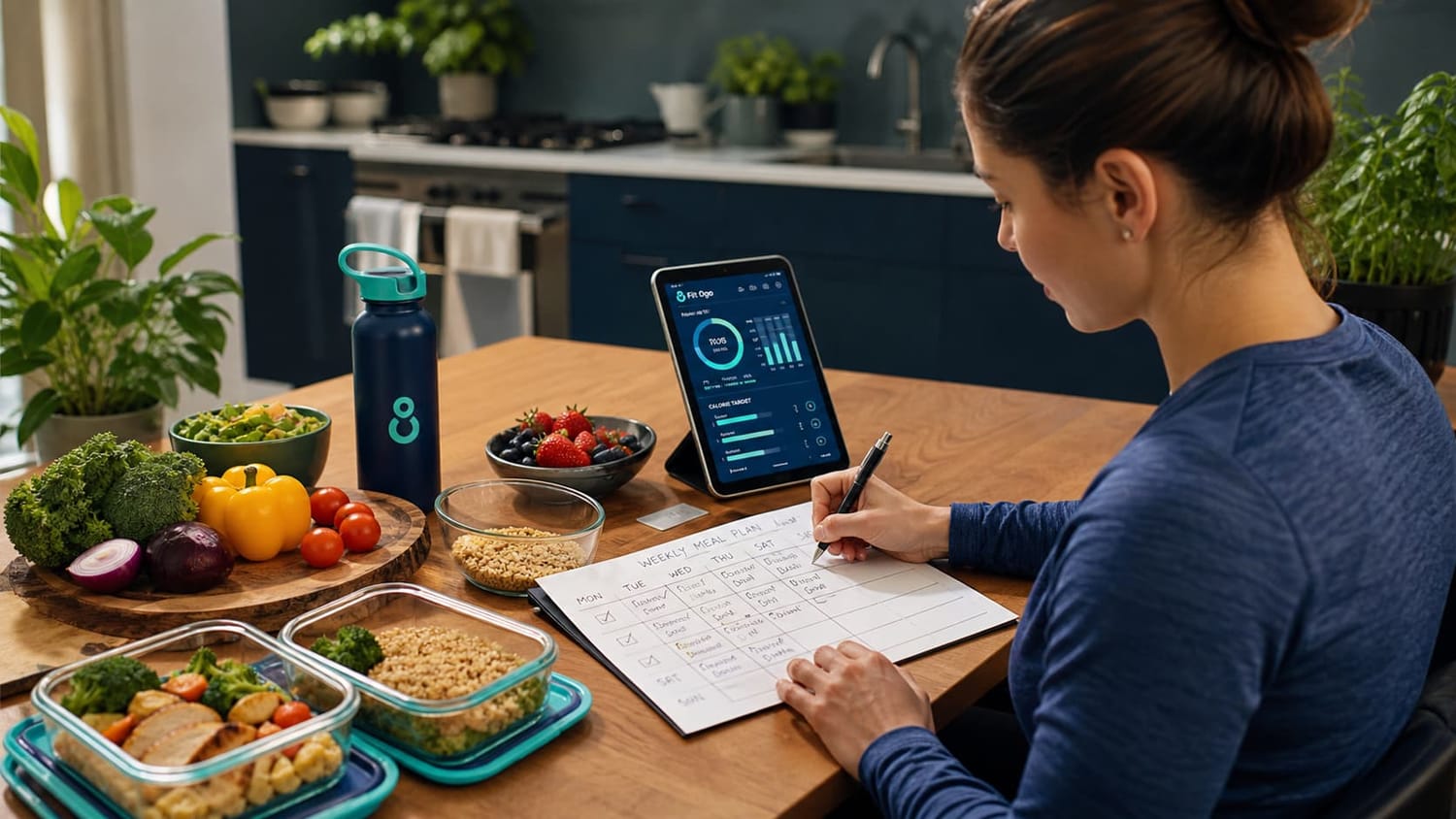
Many people think meal planning means preparing every meal perfectly, weighing every ingredient, and eating the same food all week. That version of meal planning can work for some people, but for many busy adults, it feels overwhelming.
A better starting point is simple: build a meal planning routine that helps you make fewer rushed food decisions. You do not need to control every bite. You need a practical structure that makes healthy choices easier to repeat.
This guide will show you how to build a simple meal planning routine using flexible planning, repeatable meals, grocery structure, habit tracking, and Fit Ogo™ — Smart Fitness Pal to support meal plans and recipe ideas.
Important: This article is for general wellness education only. It is not medical advice, diagnosis, treatment, clinical nutrition therapy, or a substitute for professional healthcare. If you have diabetes, kidney disease, heart disease, eating disorder history, allergies, pregnancy-related concerns, medication-related dietary needs, or other medical nutrition concerns, speak with a qualified healthcare professional or dietitian before changing your diet.
Why Meal Planning Feels Hard
Meal planning often feels hard because people try to solve too many problems at once. They want meals to be healthy, cheap, fast, high-protein, family-friendly, exciting, easy to cook, and perfectly aligned with their fitness goals. That is a lot of pressure.
The problem is not that people lack discipline. The problem is that food decisions happen when energy is low. After work, after errands, after family responsibilities, or after a stressful day, even simple food choices can feel like one more task.
A simple meal planning routine reduces that pressure. It gives you a basic plan before hunger, stress, and time pressure take over.
The Goal Is Not Perfect Eating. The Goal Is Fewer Random Decisions.
The best meal planning routine is not the one that looks impressive online. It is the one you can actually follow on a normal week.
When you are starting, focus on reducing random decisions. You can do this by creating a small list of go-to breakfasts, lunches, dinners, and snacks. Instead of asking, “What should I eat?” every day, you choose from options you already trust.
This makes healthy eating feel less like a daily battle and more like a repeatable system.
A Simple 5-Step Meal Planning Routine
1. Choose your weekly focus
Pick one simple food goal for the week, such as planning breakfast, preparing lunches, cooking two dinners, or reducing takeaway meals.
2. Pick repeatable meals
Choose meals you already like and can realistically prepare. Familiar meals are easier to repeat than complicated new recipes.
3. Build a simple grocery list
Group your list by proteins, vegetables, carbohydrates, healthy fats, snacks, and staples to make shopping easier.
4. Prep one useful thing
You do not need to prep everything. Prepare one helpful item, such as cooked rice, chopped vegetables, boiled eggs, or a protein source.
5. Track consistency
Track whether you followed your plan, not whether the week was perfect. Consistency improves through awareness.
6. Repeat and adjust
At the end of the week, keep what worked, remove what was too hard, and simplify the next version of your plan.
Start With “Meal Anchors” Instead of a Full Meal Plan
A full seven-day meal plan can feel intimidating. A simpler approach is to create meal anchors. A meal anchor is one predictable food routine you can rely on during the week.
For example, your first meal anchor might be breakfast. Instead of planning every meal, you decide to eat one of three simple breakfasts most days. That single anchor can reduce stress and improve consistency without requiring a complete lifestyle overhaul.
- Breakfast anchor: oats, eggs, yoghurt, smoothie, or toast with protein.
- Lunch anchor: leftovers, salad bowl, wrap, soup, or rice bowl.
- Dinner anchor: protein + vegetables + carbohydrate + sauce or seasoning.
- Snack anchor: fruit, yoghurt, nuts, boiled eggs, or a simple protein snack.
Fit Ogo™ tip: Use the Meal Plan Generator to create a simple weekly plan, then use the Recipe Generator to turn basic ingredients into practical meal ideas.
A Beginner-Friendly Weekly Meal Planning Template
If you do not know where to start, use a basic template. This gives your week structure while still leaving room for flexibility.
| Meal Area | Simple Goal | Example Options | Fit Ogo™ Tool to Use |
|---|---|---|---|
| Breakfast | Choose 2–3 repeatable options. | Oats, eggs, yoghurt bowl, smoothie, toast with protein. | Meal Plan Generator |
| Lunch | Make lunch easier to assemble. | Rice bowl, wrap, leftovers, soup, salad bowl. | Recipe Generator |
| Dinner | Plan 2–3 simple dinners. | Stir-fry, pasta, grilled protein, vegetables, slow-cooker meal. | Meal Plan Generator |
| Snacks | Keep simple options available. | Fruit, yoghurt, nuts, cheese, boiled eggs, veggie sticks. | Habit Tracker |
| Prep | Prepare one useful ingredient. | Cooked rice, roasted vegetables, chopped salad, cooked protein. | Saved Meal Plans |
| Review | Notice what worked. | Check what you ate, what was easy, and what needs simplifying. | Progress Tracker |
How to Build a Grocery List That Actually Helps
A useful grocery list is not just a list of random ingredients. It is a support system for the meals you already plan to eat.
A simple structure is to group groceries into categories. This helps you shop faster and avoid forgetting key items.
- Proteins: eggs, chicken, fish, tofu, beans, lentils, yoghurt, lean meat.
- Vegetables: fresh, frozen, or pre-cut vegetables that are easy to use.
- Carbohydrates: rice, oats, potatoes, pasta, bread, wraps, quinoa, fruit.
- Healthy fats: avocado, olive oil, nuts, seeds, nut butter.
- Flavour builders: herbs, spices, sauces, garlic, lemon, vinegar, broth.
- Convenience helpers: frozen vegetables, canned beans, tuna, microwave rice, pre-washed salad.
Convenience helpers matter. A meal planning routine that ignores your real schedule will not last. There is nothing wrong with using shortcuts if they help you eat better more consistently.
Use the “Protein + Plants + Energy” Formula
When you do not know what to cook, use a simple plate formula: protein, plants, and energy. This is not a medical diet plan. It is a general wellness structure that can help you build balanced meals without overthinking.
- Protein: eggs, fish, chicken, tofu, legumes, yoghurt, lean meat, or other suitable options.
- Plants: vegetables, salad, fruit, beans, lentils, or other fibre-rich foods.
- Energy: rice, oats, potatoes, pasta, bread, wraps, quinoa, or other carbohydrate sources.
- Flavour: herbs, spices, sauces, lemon, garlic, chilli, or seasoning.
This formula can create many meals: chicken rice bowls, tofu stir-fry, egg and vegetable toast, tuna wraps, lentil soup, yoghurt bowls, or salmon with potatoes and salad.
Meal Planning Does Not Mean Eating the Same Thing Every Day
Some people avoid meal planning because they think it removes variety. But simple meal planning can actually make variety easier. The key is to repeat the structure, not necessarily the exact meal.
For example, you might repeat the dinner formula “protein + vegetables + carbohydrate” while changing the flavour:
- Monday: chicken, rice, vegetables, teriyaki-style sauce.
- Tuesday: tofu, noodles, vegetables, garlic and ginger.
- Wednesday: fish, potatoes, salad, lemon and herbs.
- Thursday: beans, rice, salsa, avocado, and salad.
The pattern stays simple, but the meals still feel different.
What If You Do Not Like Cooking?
Meal planning can still work if you do not love cooking. The goal is to make food easier, not to become a chef.
Start with assembly meals. These are meals you build from simple ready-to-use parts:
- Rotisserie chicken + salad kit + wrap.
- Microwave rice + canned tuna + cucumber + sauce.
- Greek yoghurt + fruit + oats or granola.
- Eggs + toast + spinach.
- Canned beans + rice + salsa + avocado.
The best meal plan is not the fanciest one. It is the one that helps you eat reasonably well when life gets busy.
Meal planning becomes easier when it is part of a wider routine that also includes movement, habits, calm, and progress reflection. Learn how to build a wellness routine when you keep starting over.
Common Meal Planning Mistakes to Avoid
Simple meal planning works best when it avoids unnecessary pressure. Watch out for these common mistakes:
- Planning too many new recipes: New recipes require more energy. Start with familiar meals.
- Buying ingredients without a plan: A full fridge does not guarantee useful meals.
- Ignoring your schedule: Busy nights need easy meals, leftovers, or assembly options.
- Making the plan too strict: Leave room for leftovers, social meals, and changes.
- Forgetting snacks: Simple snacks can prevent rushed decisions later.
- Not reviewing the week: A short review helps you improve the next plan.
How Fit Ogo™ Can Help With Meal Planning
Fit Ogo™ is designed to support realistic routine-building. For meal planning, it can help you move from “What should I eat?” to a clearer weekly structure.
- Meal Plan Generator: Create general meal plan ideas based on your preferences and goals.
- Recipe Generator: Turn ingredients or meal ideas into practical recipes.
- Saved Meal Plans: Keep plans you want to reuse or adjust later.
- Habit Tracker: Track simple food habits such as preparing breakfast, drinking water, or planning lunches.
- Progress Tracker: Reflect on energy, consistency, meal preparation, and routine patterns.
Simple Fit Ogo™ workflow: Generate a meal plan, choose three repeatable meals, create recipe ideas, save the plan, track one food habit, then review what worked at the end of the week.
Your First 7 Days of Simple Meal Planning
Here is a beginner-friendly seven-day approach that does not require perfection.
| Day | Focus | Simple Action | Fit Ogo™ Tool |
|---|---|---|---|
| Day 1 | Choose your food goal | Pick one focus: breakfast, lunch, dinner, snacks, or grocery planning. | Meal Plan Generator |
| Day 2 | Select repeatable meals | Choose 2–3 meals you already like and can realistically make. | Saved Meal Plans |
| Day 3 | Build a grocery list | Group groceries by protein, plants, carbohydrates, fats, and staples. | Meal Plan Generator |
| Day 4 | Prep one helpful item | Cook rice, chop vegetables, prepare protein, or wash salad ingredients. | Habit Tracker |
| Day 5 | Create a recipe idea | Use ingredients you already have to generate one simple meal idea. | Recipe Generator |
| Day 6 | Use leftovers wisely | Turn leftovers into a wrap, bowl, salad, soup, or simple lunch. | Recipe Generator |
| Day 7 | Review and simplify | Keep what worked, remove what was too difficult, and plan next week. | Progress Tracker |
A Simple Mindset for Meal Planning
The goal is not to become perfect with food. The goal is to make supportive choices easier. Meal planning works best when it respects your real life.
Some weeks will be organized. Some weeks will be messy. A good routine helps you return without guilt. If your plan falls apart on Wednesday, you do not need to quit. You can simply choose one useful meal, one grocery item, or one prep action and continue.
Meal planning is not about control. It is about reducing friction.
FAQs
What is the easiest way to start meal planning?
Start with one meal anchor, such as breakfast or lunch. Choose 2–3 repeatable options, make a short grocery list, and repeat what works before adding more complexity.
Do I need to meal prep every meal?
No. You can prepare one useful item, such as cooked rice, chopped vegetables, or a protein source. Small preparation can still make the week easier.
How many meals should I plan at first?
Start with 3–5 meals or one meal category for the week. Planning every meal can feel overwhelming for beginners.
Can Fit Ogo™ create meal plans?
Yes. Fit Ogo™ includes a Meal Plan Generator and Recipe Generator that can help create general meal planning ideas and practical recipe suggestions.
Is Fit Ogo™ meal planning medical nutrition advice?
No. Fit Ogo™ provides general wellness education and routine support only. It does not provide medical nutrition therapy, diagnosis, treatment, or a substitute for professional healthcare or dietitian advice.
Conclusion: Make Food Easier, Not Perfect
A simple meal planning routine can help you reduce stress, save time, and support your fitness and wellness goals. But it does not need to be rigid. Start with one meal anchor, choose repeatable foods, build a practical grocery list, prep one useful item, and review what worked.
Fit Ogo™ can help you create meal plans, generate recipes, save useful plans, track food habits, and reflect on progress over time.
The best meal plan is not the most impressive one. It is the one you can return to, adjust, and repeat in real life.